FAQ - Horse pastures

Do you have a question about your horse pasture? We have listed the most frequently asked questions here for you.
Healthy grass
- Is roughage healthy for my horse?
Grass is an important part of your horse's diet. At least 60% of the diet should consist of roughage (grass - hay or silage). For horses with low energy needs, the diet can even be entirely composed of roughage. Horses need roughage that is high in fiber and low in fructans (sugar).
- Will my horse get laminitis from grass?
Laminitis is primarily caused by grass with a high fructan content. Fructan is a carbohydrate (a type of sugar) produced by the grass plant under the influence of sunlight. Grass plants produce a lot of fructan, especially during cold nights and sunny days. The fructan content varies significantly between different grass species. Healthy grass for horses consists of grass with a low fructan content.
- Is there fructan in Horse Master®?
Barenbrug has conducted research on the fructan content in more than 70 grass species. The grasses in the Horse Master® seed mix are specially selected for their low fructan content and contain on average less than half the fructan compared to other grass seed mixes.
- What are endophytes and are they harmful to horses?
An endophyte is a fungus that can be found in all parts of grass except the roots. The highest concentration is found in the leaves and leaf sheaths. The infection is transmitted through the seed of the infected plant. Endophytes are toxic to horses. The Horse Master® seed mix is composed of varieties that are free of endophytes.
- Why is cow grass bad for horses?
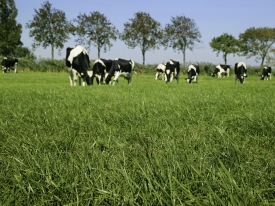
Grass for cows contains a lot of energy, which helps cows produce a lot of milk. Horses, on the other hand, need grass that is high in fiber and low in fructans (sugar). Additionally, cows graze with their tongues, while horses bite the grass close to the ground. This requires grass with a very low regrowth point to stimulate rapid regrowth and prevent bare patches in the pasture.
- In which growth stage is grass ideal for my horse?
Grass that is approximately 15 cm (6 inches) high is well-balanced in composition and suitable for horses. Barenbrug advises offering grass to horses at this stage. To achieve this, a system of rotational grazing with multiple pastures (3 to 5) is necessary. Allow the horses into the pasture once the grass has reached the right height. Let the grass be grazed down and then move the horses to the next pasture once it has reached the ideal height. The grazed pasture can then be maintained and fertilized. This way, your horse always has access to the right quality of grass, and the pastures can be properly maintained.
Establishment and Maintenance
- What is the best time to sow a horse pasture?
Spring and early autumn are good periods to sow grassland. During these times, the temperature and humidity provide optimal conditions for grass germination and growth. The soil temperature should be at least 8°C (this can be easily measured). Try to sow before an expected rain shower. You can sow Horse Master® until the end of September. Hay Master should be sown before September 1st. If you sow later, the young grass plants may not develop sufficiently before winter and could suffer frost damage.
- How long should I wait to use a pasture after sowing?
After sowing, the pasture should not be used for two months. The grass must be mowed at least once before grazing. For the first mowing, the grass should be approximately 15 cm (6 inches) long. Any bare spots can be reseeded, and the land can be supplemented with additional nutrients (nitrogen, potassium, and phosphorus) if necessary.
- How can I restore a poor pasture with many bare spots?
If the grass cover is thin and has bare spots, overseeding is a good solution to restore the pasture. A major advantage of overseeding, compared to reseeding, is that you can use the pasture again more quickly. Additionally, overseeding is cheaper than reseeding.
- What is the best time to restore a horse pasture?
The best times for overseeding are from February to April and from August to September. For overseeding a pasture with many bare spots, you will need 40 kg of Horse Master® per hectare. If the pasture has fewer bare spots, 25 kg of Horse Master® per hectare will suffice.
Fertilizing
- Is it necessary to fertilize a horse pasture?
Fertilizing and liming are essential to keep your pasture in good condition. It is a myth that a poor-quality pasture is suitable for horses. Horses need nutrients and trace elements from the grass to function well. This can only be achieved through proper fertilization. Moreover, horses in a poor-quality pasture ingest too much sand, which significantly increases the risk of sand colic.
- Which fertilizers does my horse pasture need?
The condition of the soil is the basis for fertilization. It is advisable to have a soil analysis performed every four to five years. This can be done by an institute that specializes in soil sampling. Ideally, a soil sample should be taken before spraying the existing grass.
Fertilizing a horse pasture with horse manure is not recommended due to the risk of worm infestation.
Hay or silage
- Is Horse Master® suitable for hay or silage?
Yes, you can easily make hay or silage from a Horse Master® pasture. However, if you use the pasture exclusively for hay or silage production, we recommend sowing the pasture with Hay Master. Hay Master provides a higher grass yield per hectare.
- What is the yield of a Hay Master pasture?
The yield of a Hay Master pasture is between 10 and 12 tons per hectare. Hay Master is only suitable for mowing pastures.